Keep both apps
Remotion Studio stays visual. Codex stays the coding agent.
Remotion Codex Video Studio
A local Remotion app that sends exact frame context into Codex, so you can vibe-code videos without leaving the Remotion/Codex flow.
Demo
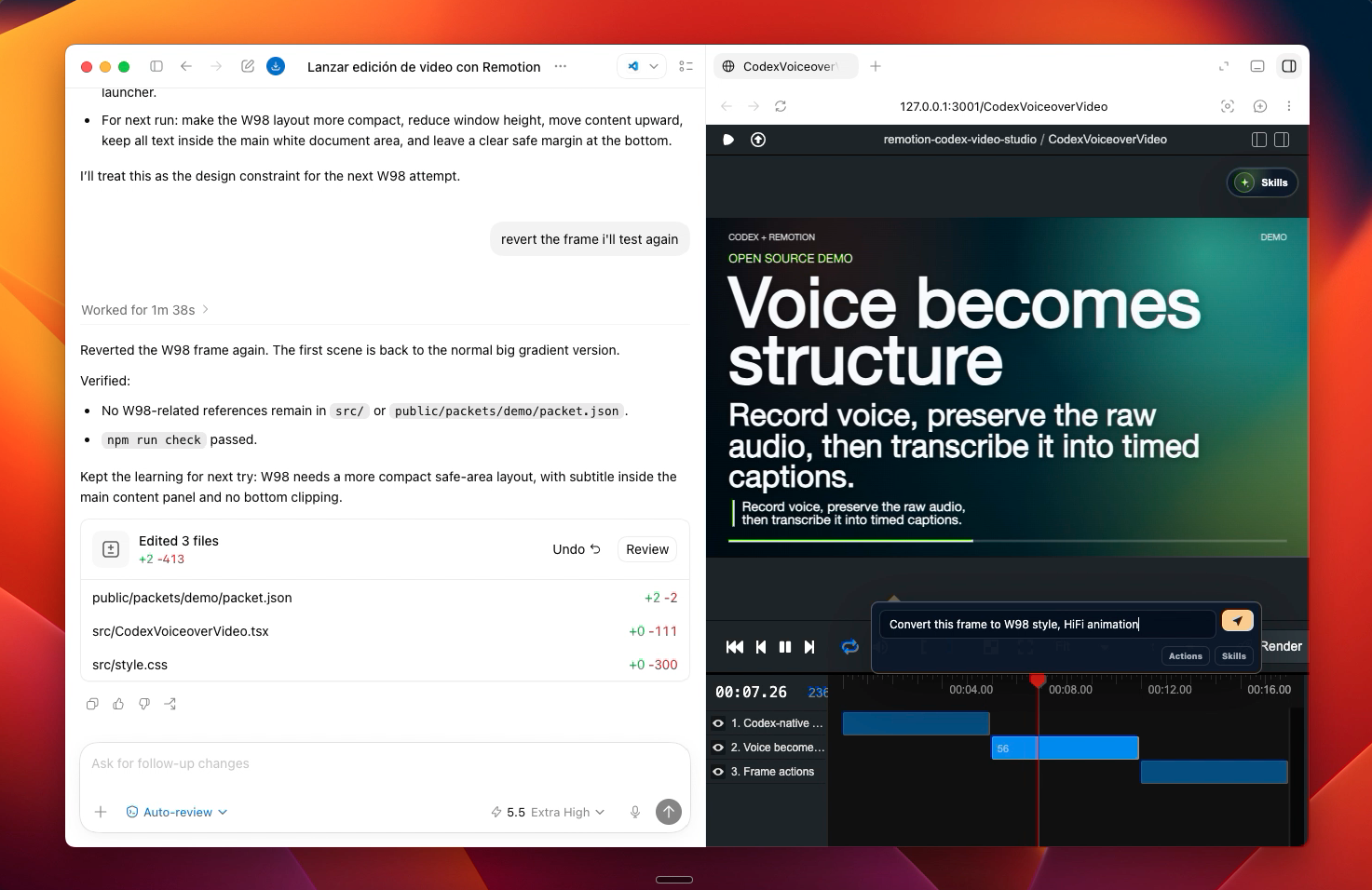
The demo turns a Remotion frame into Windows 98 style from inside the local app. The useful part is not that Codex can edit code; it is that Remotion knows what context to send before Codex edits.
Workflow
Remotion stays the visual surface. Codex stays the agent. The bridge is a local handoff that carries the exact object context instead of making the user manually explain the video state.
Remotion Studio stays visual. Codex stays the coding agent.
The local Remotion app knows the frame, packet, files, and context.
The prompt lands in the visible Codex thread with the exact edit scope.
Codex changes the local Remotion project instead of guessing from a vague prompt.
Screens
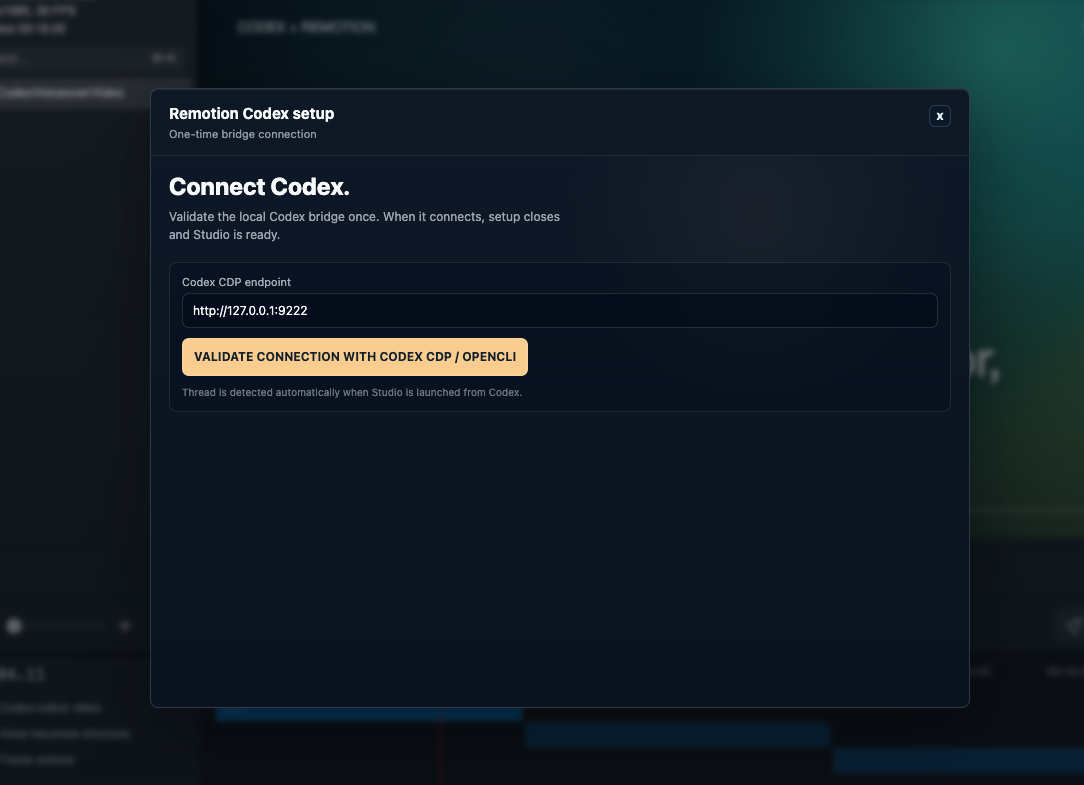
The repo keeps the integration inspectable: setup docs, local packet files, the Studio overlay, and the CDP handoff path are all visible.
Repo
This is experimental, but it is intentionally shaped as something a builder can inspect, clone, and adapt for other Codex-native tools.
The repo is public, MIT licensed, and built as an experimental Codex-native Remotion workflow.
The first version does not fork Remotion. It launches Studio and injects a small preview-adjacent Codex overlay.
The video state is inspectable in a local packet file, so frame and scene edits can be handed to Codex with real context.
The first demo is Remotion, but the pattern is broader: local tools can keep their own UI while handing precise context to Codex when the user asks for an edit.